


Welcome to Free Ebook Engineering http://freebooks-me.blogspot.com!
Showing posts with label chemical engineering. Show all posts
Showing posts with label chemical engineering. Show all posts
Chemical Engineering Design Principles Practice and Economics of Plant and Process Design
Friday, September 2, 2016
Views:
BY Anonymous
0 COMMENTS
0 COMMENTS
Chemical Engineering Design Principles Practice and Economics of Plant and Process Design
Author(s): Gavin Towler, R K Sinnott
Series: Periodical:
Publisher: Butterworth-Heinemann
Year: 2007
Language: English
Pages (biblio\tech): 1266\1266
ISBN: 0750684232, 9780750684231
Size: 23 MB (24392671 bytes) Extension: pdf

Bottom line: For a holistic view of chemical engineering design, this book provides as much, if not more, than any other book available on the topic.' Extract from Chemical Engineering Resources review.
 Chemical Engineering Design is a complete course text for students of chemical engineering. Written for the Senior Design Course, and also suitable for introduction to chemical engineering courses, it covers the basics of unit operations and the latest aspects of process design, equipment selection, plant and operating economics, safety and loss prevention. It is a textbook that students will want to keep through their undergraduate education and on into their professional lives.
Author(s): Gavin Towler, R K Sinnott
Series: Periodical:
Publisher: Butterworth-Heinemann
Year: 2007
Language: English
Pages (biblio\tech): 1266\1266
ISBN: 0750684232, 9780750684231
Size: 23 MB (24392671 bytes) Extension: pdf

Bottom line: For a holistic view of chemical engineering design, this book provides as much, if not more, than any other book available on the topic.' Extract from Chemical Engineering Resources review.

* Provides students with a text of unmatched relevance for the Senior Design Course and Introductory Chemical Engineering Courses
* Teaches commercial engineering tools for simulation and costing
* Comprehensive coverage of unit operations, design and economics
Strong emphasis on HS&E issues, codes and standards, including API, ASME and ISA design codes and ANSI standards
* 108 realistic commercial design projects from diverse industries
* A rigorous pedagogy assists learning, with detailed worked examples, end of chapter exercises, plus supporting data and Excel spreadsheet calculations plus over 150 Patent References, for downloading from the companion website
* Extensive instructor resources: 1170 lecture slides on CD plus fully worked solutions manual

Handbook of Farm, Dairy and Food Machinery Engineering
BY Anonymous
0 COMMENTS
0 COMMENTS
Handbook of Farm, Dairy and Food Machinery Engineering by by:Myer Kutz
ISBN: 978-0-12-385881-8
Handbook of Farm, Dairy and Food Machinery Engineering is the essential reference for engineers who need to understand those aspects of the food industry from farm machinery to food storage facilities to the machinery that processes and packages our foods.
The process of getting food from "farm to fork," as the saying goes, involves more than planting, harvesting, shipping, processing, packaging and distributing—though those are all key components. Effective and efficient food delivery systems are built around processes that maximize the effort while minimizing cost, time, and resource depletion.
This comprehensive reference is for engineers who design and build machinery and processing equipment, shipping containers, and packaging and storage equipment. It includes cutting-edge coverage of microwave vacuum application in grain processing, cacao processing, fruit and vegetable processing, ohmic heating of meat, facility design, closures for glass containers, double seaming, and much more.
- Provides cross-topic information for translational research and potential application
- Focuses on design and controls – written for engineers by engineers – always with practical applications in mind
- Includes design of machinery and facilities as well as theoretical basis for determining and predicting behavior of foods as they are handled and processed
Handbook of Farm, Dairy and Food Machinery
BY Anonymous
0 COMMENTS
0 COMMENTS
Handbook of Farm, Dairy and Food Machinery by Myer Kutz
SPRINGER VERLAG

Mirror
SPRINGER VERLAG
The Handbook of Farm, Dairy, and Food Machinery, is a comprehensive reference for engineers who design and build farm machinery, processing equipment, shipping containers and packaging, as well as storage equipment.
ISBN-10: 1402059131
ISBN-13: 9781402059131
Indispensable for food, chemical, mechanical, and packaging engineers, Handbook of Farm, Dairy, and Food Machinery covers in one comprehensive volume fundamental food engineering principles in the design of food industry machinery. The handbook provides broad, yet technically detailed coverage of food safety, regulations, product processing systems, packaging, facilities, waste management, and machinery design topics in a ôfarm to the forkö organization.
The 22 chapters are contributed by leading experts worldwide with numerous illustrations, tables, and references. The book includes the new USDA regulations for ôcertified organicö processing, as well as state-of-the-art technologies for equipment both on the farm and in the plant.
DownloadMirror
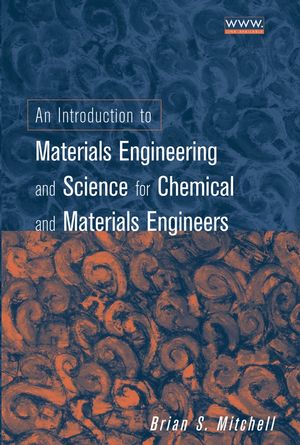
An Introduction to Materials Engineering and Science: For Chemical and Materials
Saturday, August 27, 2016
Views:
BY Anonymous
0 COMMENTS
0 COMMENTS
by Brian S. Mitchell (Tulane Univ.)

An Introduction to Materials Engineering and Science for Chemical and Materials Engineers provides a solid background in materials engineering and science for chemical and materials engineering students. This book:Organizes topics on two levels; by engineering subject area and by materials class. Incorporates instructional objectives, active-learning principles, design-oriented problems, and web-based information and visualization to provide a unique educational experience for the student. Provides a foundation for understanding the structure and properties of materials such as ceramics/glass, polymers, composites, bio-materials, as well as metals and alloys. Takes an integrated approach to the subject, rather than a "metals first" approach.
content :
Preface.
Acknowledgments.
1 The Structure of Materials : 1.0 Introduction and Objectives. 1.1 Structure of Metals and Alloys. 1.2 Structure of Ceramics and Glasses. 1.3 Structure of Polymers. 1.4 Structure of Composites. 1.5 Structure of Biologics. References. Problems. 2 Thermodynamics of Condensed Phases.
2.0 Introduction and Objectives : 2.1 Thermodynamics of Metals and Alloys. 2.2 Thermodynamics of Ceramics and Glasses. 2.3 Thermodynamics of Polymers. 2.4 Thermodynamics of Composites. 2.5 Thermodynamics of Biologics. References. Problems. 3 Kinetic Processes in Materials.
3.0 Introduction and Objectives : 3.1 Kinetic Processes in Metals and Alloys. 3.2 Kinetic Processes in Ceramics and Glasses*. 3.3 Kinetic Processes in Polymers. 3.4 Kinetic Processes in Composites*. 3.5 Kinetic Processes in Biologics*. References. Problems. 4 Transport Properties of Materials.
4.0 Introduction and Objectives : 4.1 Momentum Transport Properties of Materials*. 4.2 Heat Transport Properties of Materials. 4.3 Mass Transport Properties of Materials*. References. Problems.
5 Mechanics of Materials : 5.0 Introduction and Objectives. 5.1 Mechanics of Metals and Alloys. 5.2 Mechanics of Ceramics and Glasses. 5.3 Mechanics of Polymers. 5.4 Mechanics of Composites. 5.5 Mechanics of Biologics. References. Problems.
6 Electrical, Magnetic, and Optical Properties of Materials : 6.1 Electrical Properties of Materials. 6.2 Magnetic Properties of Materials. 6.3 Optical Properties of Materials. References. Problems.
7 Processing of Materials : 7.0 Introduction. 7.1 Processing of Metals and Alloys. 7.2 Processing of Ceramics and Glasses. 7.3 Processing of Polymers. 7.4 Processing of Composites. 7.5 Processing of Biologics. References. Problems.
8 Case Studies in Materials Selection : 8.0 Introduction and Objectives. 8.1 Selection of Metals for a Compressed Air Tank. 8.2 Selection of Ceramic Piping for Coal Slurries in a Coal Liquefaction Plant. 8.3 Selection of Polymers for Packaging. 8.4 Selection of a Composite for an Automotive Drive Shaft. 8.5 Selection of Materials as Tooth Coatings. References. Problems.
Appendix 1: Energy Values for Single Bonds.
Appendix 2: Structure of Some Common Polymers.
Appendix 3: Composition of Common Alloys.
Appendix 4: Surface and Interfacial Energies.
Appendix 5: Thermal Conductivities of Selected Materials.
Appendix 6: Diffusivities in Selected Systems.
Appendix 7: Mechanical Properties of Selected Materials.
Appendix 8: Electrical Conductivity of Selected Materials.
Appendix 9: Refractive Index of Selected Materials. Answers to Selected Problems. Index. *Sections marked with an asterisk can be omitted in an introductory course.
Advances in Chemical Engineering, Molecular and Cellular Foundations of Biomater
BY Anonymous
0 COMMENTS
0 COMMENTS

This latest volume in the Advances in Chemical Engineering series, is a contemporary analysis of the preparation, structure and properties of biomaterials with emphasis on the molecular design and material/polymer interactions. The book addresses cell-biomaterials adhesion, biomaterials and gene therapy, protein adsorption , platelet and white cell activation processes, molecular design and surface modification of novel biomaterials.
Content:
Contents
Pages v-vii
Contributors
Page ix
Preface
Pages xi-xiii
THE NEW NEW BIOMATERIALS Review Article
Pages 1-6
Michael V. Sefton
CELL–MATERIAL INTERACTIONS Review Article
Pages 7-46
Kristyn S. Masters, Kristi S. Anseth
POLYMERIC BIOMATERIALS FOR NERVE REGENERATION Review Article
Pages 47-74
Surya K Mallapragada, Jennifer B Recknor
STRUCTURAL AND DYNAMIC RESPONSE OF NEUTRAL AND INTELLIGENT NETWORKS IN BIOMEDICAL ENVIRONMENTS Review Article
Pages 75-130
Anthony M. Lowman, Thomas D. Dziubla, Petr Bures, Nicholas A. Peppas
BIOMATERIALS AND GENE THERAPY Review Article
Pages 131-168
F.Kurtis Kasper, Antonios G Mikos
SURFACE-ERODIBLE BIOMATERIALS FOR DRUG DELIVERY Review Article
Pages 169-218
Balaji Narasimhan, Matt J Kipper
Index
Pages 219-226
CONTENTS OF VOLUMES IN THIS SERIAL
Pages 227-234
A Conceptual Introduction to Chemistry
BY Anonymous
0 COMMENTS
0 COMMENTS

A Conceptual Introduction to Chemistry by Bauer/Birk/Marks offers today's student a fresh perspective to the introduction of chemistry. This new textbook offers a conceptual approach to chemistry by starting first with macroscopic phenomena, and then presenting the underlying microscopic detail. Each chapter opens with a real-life scenario that helps students connect abstract chemical concepts to their own lives. The math found in A Conceptual Introduction to Chemistry is introduced on a need-to-know basis, with "Math Toolboxes" ending each chapter, in support of the math skills required in that chapter.
Cover Page......Page 1
Title Page......Page 2
Copyright Page......Page 3
Dedication......Page 4
About the Authors......Page 5
Preface......Page 12
Brief Contents......Page 6
Contents......Page 7
1: Matter and Energy......Page 21
Composition of Matter......Page 23
Representations of Matter......Page 29
States of Matter......Page 31
1.2: PHYSICAL AND CHEMICAL CHANGES AND PROPERTIES OF MATTER......Page 33
Physical Properties......Page 34
Physical Changes......Page 43
Chemical Properties......Page 44
1.3: ENERGY AND ENERGY CHANGES......Page 47
Observations......Page 50
Hypotheses......Page 51
Theories......Page 52
Scientific Inquiry in Practice......Page 53
SUMMARY......Page 54
Math Toolbox 1.1: Scientific Notation......Page 55
Math Toolbox 1.2: Significant Figures......Page 57
Math Toolbox 1.3: Units and Conversions......Page 60
QUESTIONS AND PROBLEMS......Page 64
2: Atoms, Ions, and the Periodic Table......Page 71
2.1: DALTON’S ATOMIC THEORY......Page 73
Subatomic Particles......Page 75
The Nuclear Atom......Page 77
Isotopes, Atomic Number, and Mass Number......Page 79
2.3: IONS......Page 84
2.4: ATOMIC MASS......Page 87
Classification of Elements......Page 90
Ions and the Periodic Table......Page 93
KEY TERMS......Page 95
QUESTIONS AND PROBLEMS......Page 96
3: Chemical Compounds......Page 103
3.1: IONIC AND MOLECULAR COMPOUNDS......Page 105
Monatomic Ions......Page 110
Polyatomic Ions......Page 112
3.3: FORMULAS FOR IONIC COMPOUNDS......Page 115
3.4: NAMING IONIC COMPOUNDS......Page 118
3.5: NAMING AND WRITING FORMULAS FOR MOLECULAR COMPOUNDS......Page 123
3.6: ACIDS AND BASES......Page 126
3.7: PREDICTING PROPERTIES AND NAMING COMPOUNDS......Page 130
SUMMARY......Page 131
QUESTIONS AND PROBLEMS......Page 132
4: Chemical Composition......Page 139
4.1: PERCENT COMPOSITION......Page 142
Moles and Particles......Page 144
Molar Mass......Page 147
Empirical and Molecular Formulas......Page 152
Determining Empirical Formulas......Page 154
Empirical Formulas from Percent Composition......Page 155
Empirical Formulas for Compounds Containing More Than Two Elements......Page 156
Empirical Formulas with Fractional Mole Ratios......Page 158
Molecular Formulas from Empirical Formulas......Page 159
Determining Percent Composition......Page 160
Concentration......Page 162
Percent by Mass......Page 163
Molarity......Page 164
Dilution......Page 168
SUMMARY......Page 170
QUESTIONS AND PROBLEMS......Page 171
5: Chemical Reactions and Equations......Page 177
5.1: WHAT IS A CHEMICAL REACTION?......Page 179
5.2: HOW DO WE KNOW A CHEMICAL REACTION OCCURS?......Page 180
5.3: WRITING CHEMICAL EQUATIONS......Page 182
5.4: PREDICTING CHEMICAL REACTIONS......Page 189
Decomposition Reactions......Page 192
Combination Reactions......Page 194
Single-Displacement Reactions......Page 196
Double-Displacement Reactions......Page 199
Combustion Reactions......Page 204
5.5: REPRESENTING REACTIONS IN AQUEOUS SOLUTION......Page 206
SUMMARY......Page 208
QUESTIONS AND PROBLEMS......Page 209
6: Quantities in Chemical Reactions......Page 219
6.1: THE MEANING OF A BALANCED EQUATION......Page 222
6.2: MOLE-MOLE CONVERSIONS......Page 223
6.3: MASS-MASS CONVERSIONS......Page 225
6.4: LIMITING REACTANTS......Page 228
6.5: PERCENT YIELD......Page 238
Law of Conservation of Energy......Page 240
Energy Changes That Accompany Chemical Reactions......Page 241
Quantities of Heat......Page 243
6.7: HEAT CHANGES IN CHEMICAL REACTIONS......Page 249
SUMMARY......Page 252
QUESTIONS AND PROBLEMS......Page 253
7: Electron Structure of the Atom......Page 263
7.1: ELECTROMAGNETIC RADIATION AND ENERGY......Page 265
Properties of Electromagnetic Radiation......Page 266
Atomic Spectra......Page 270
7.2: THE BOHR MODEL OF THE HYDROGEN ATOM......Page 271
7.3: THE MODERN MODEL OF THE ATOM......Page 274
Orbital Diagrams for Multielectron Atoms......Page 276
Electron Configurations......Page 280
7.4: PERIODICITY OF ELECTRON CONFIGURATIONS......Page 281
7.5: VALENCE ELECTRONS FOR THE MAIN-GROUP ELEMENTS......Page 286
7.6: ELECTRON CONFIGURATIONS FOR IONS......Page 288
Chemical Reactivity and Electron Configurations......Page 290
Ionization Energy......Page 292
Atomic Size......Page 296
Sizes of Ions......Page 297
SUMMARY......Page 299
QUESTIONS AND PROBLEMS......Page 300
8: Chemical Bonding......Page 305
8.1: TYPES OF BONDS......Page 307
Ionic and Covalent Bonding......Page 308
Electronegativity......Page 310
Lewis Symbols......Page 313
Structures of Ionic Crystals......Page 315
8.3: COVALENT BONDING......Page 316
Lewis Formulas for the Diatomic Elements......Page 317
Valence Electrons and Number of Bonds......Page 318
Structures of Covalent Molecules......Page 320
Exceptions to the Octet Rule......Page 325
Bonding in Carbon Compounds......Page 326
The Valence-Shell Electron-Pair Repulsion Theory......Page 329
Polarity of Molecules......Page 335
KEY TERMS......Page 338
QUESTIONS AND PROBLEMS......Page 339
9: The Gaseous State......Page 345
Temperature and Density......Page 348
Pressure......Page 349
Volume and Pressure......Page 352
Volume and Temperature......Page 356
Volume, Pressure, and Temperature......Page 359
Avogadro’s Hypothesis......Page 361
9.3: THE IDEAL GAS LAW......Page 364
Calculations with the Ideal Gas Law......Page 365
Dalton’s Law of Partial Pressures......Page 367
Postulates of Kinetic-Molecular Theory......Page 369
Diffusion and Effusion......Page 371
Product Volume from Reactant Volume......Page 372
Moles and Mass from Volume......Page 374
SUMMARY......Page 375
Math Toolbox 9.1: Graphing......Page 376
Math Toolbox 9.2: Solving Simple Algebraic Equations......Page 378
QUESTIONS AND PROBLEMS......Page 380
10: The Liquid and Solid States......Page 391
10.1: CHANGES OF STATE......Page 394
Liquid-Gas Phase Changes......Page 396
Liquid-Solid Phase Changes......Page 399
Solid-Gas Phase Changes......Page 400
Cooling and Heating Curves......Page 402
Energy Changes......Page 403
London Dispersion Forces......Page 407
Dipole-Dipole Forces......Page 409
Hydrogen Bonding......Page 410
Trends in Intermolecular Forces......Page 413
Density......Page 416
Surface Tension......Page 417
Crystals and Crystal Lattices......Page 420
Types of Crystalline Solids......Page 421
KEY TERMS......Page 428
QUESTIONS AND PROBLEMS......Page 429
11: Solutions......Page 435
11.1: THE COMPOSITION OF SOLUTIONS......Page 437
11.2: THE SOLUTION PROCESS......Page 441
Structure......Page 445
Temperature......Page 447
Pressure......Page 448
11.4: MEASURING CONCENTRATIONS OF SOLUTIONS......Page 449
Percent by Mass......Page 451
Mass/Volume Percent......Page 453
Parts per Million and Parts per Billion......Page 454
Molarity......Page 455
Molality......Page 456
Precipitation Reactions......Page 457
Acid-Base Titrations......Page 461
Osmotic Pressure......Page 463
Vapor Pressure Lowering......Page 465
Boiling Point Elevation......Page 466
Freezing Point Depression......Page 467
Colligative Properties and Strong Electrolytes......Page 468
SUMMARY......Page 469
QUESTIONS AND PROBLEMS......Page 470
12: Reaction Rates and Chemical Equilibrium......Page 477
12.1: REACTION RATES......Page 480
12.2: COLLISION THEORY......Page 481
12.3: CONDITIONS THAT AFFECT REACTION RATES......Page 484
Temperature......Page 485
Catalysts......Page 487
12.4: CHEMICAL EQUILIBRIUM......Page 492
12.5: THE EQUILIBRIUM CONSTANT......Page 493
The Equilibrium Constant Expression......Page 494
Predicting the Direction of a Reaction......Page 497
Heterogeneous Equilibrium......Page 499
Reactant or Product Concentration......Page 502
Volume of the Reaction Container......Page 504
Temperature......Page 507
Increasing Product Yield......Page 509
SUMMARY......Page 510
QUESTIONS AND PROBLEMS......Page 511
13: Acids and Bases......Page 519
Acid and Base Definitions......Page 521
Conjugate Acid-Base Pairs......Page 523
13.2: STRONG AND WEAK ACIDS AND BASES......Page 525
Strong Bases......Page 526
Weak Acids......Page 527
Weak Bases......Page 529
Acid Ionization Constants......Page 532
Polyprotic Acids......Page 533
The Ion-Product Constant of Water......Page 535
Calculating H3O+ and OH– Ion Concentrations......Page 536
Calculating pH......Page 539
Calculating pOH......Page 542
Calculating Concentrations from pH or pOH......Page 543
Measuring pH......Page 545
13.6: BUFFERED SOLUTIONS......Page 546
Math Toolbox 13.1: Log and Inverse Log Functions......Page 550
QUESTIONS AND PROBLEMS......Page 553
14: Oxidation-Reduction Reactions......Page 559
14.1: WHAT IS AN OXIDATION-REDUCTION REACTION?......Page 562
14.2: OXIDATION NUMBERS......Page 566
14.3: BATTERIES......Page 571
14.4: BALANCING SIMPLE OXIDATION-REDUCTION EQUATIONS......Page 578
14.5: BALANCING COMPLEX OXIDATION-REDUCTION EQUATIONS......Page 582
14.6: ELECTROCHEMISTRY......Page 587
Voltaic Cells......Page 588
Electrolytic Cells......Page 590
14.7: CORROSION PREVENTION......Page 593
KEY TERMS......Page 595
QUESTIONS AND PROBLEMS......Page 596
15: Nuclear Chemistry......Page 603
Nuclear Decay......Page 605
Radiation......Page 606
Equations for Nuclear Reactions......Page 607
Predicting Spontaneous Nuclear Decay Reactions......Page 614
Detection of Radiation......Page 618
Half-Lives......Page 619
Archeological Dating......Page 621
Geological Dating......Page 622
Medical Diagnoses......Page 623
Positron Emission Tomography......Page 624
Radiation Exposure......Page 625
Radon......Page 627
Uranium-235 Fission......Page 628
Chain Reactions......Page 629
Fission Reactors......Page 630
Fusion Reactors......Page 631
SUMMARY......Page 633
QUESTIONS AND PROBLEMS......Page 634
16: Organic Chemistry......Page 639
16.1: REPRESENTATIONS OF ORGANIC MOLECULES......Page 643
Classes of Hydrocarbons......Page 647
Petroleum......Page 649
Alkanes......Page 650
Alkenes and Alkynes......Page 656
Cycloalkanes and Cycloalkenes......Page 660
Aromatic Hydrocarbons......Page 661
Alcohols......Page 664
Aldehydes......Page 666
Carboxylic Acids......Page 667
Esters......Page 668
16.8: AMINES......Page 671
Alkenes and Alkynes......Page 672
Other Naming Conventions......Page 673
KEY TERMS......Page 674
QUESTIONS AND PROBLEMS......Page 675
17: Biochemistry......Page 681
Composition of Proteins......Page 684
Hydrolysis of Proteins......Page 691
Structure of Proteins......Page 693
17.2: NUCLEIC ACIDS......Page 698
Structure of Nucleic Acids......Page 699
Deoxyribonucleic Acid and Replication......Page 702
Ribonucleic Acid, Transcription, and Translation......Page 703
17.3: CARBOHYDRATES......Page 707
Simple Carbohydrates......Page 708
Complex Carbohydrates......Page 710
17.4: LIPIDS......Page 714
SUMMARY......Page 719
QUESTIONS AND PROBLEMS......Page 720
APPENDIX A: Useful Reference Information......Page 725
APPENDIX B: Math Toolboxes......Page 727
APPENDIX C: Answers to Practice Problems......Page 728
APPENDIX D: Answers to Selected Questions and Problems......Page 733
Glossary......Page 764
Credits......Page 771
Index......Page 773
Download Mirror
if broken Here
A Working Guide to Process Equipment
BY Anonymous
0 COMMENTS
0 COMMENTS
| ||||||
|---|---|---|---|---|---|---|
Introduction.
How Trays Work--Flooding. How Trays Work--Dumping.
Why Control Tower Pressure. What Drives Distillation Towers. How Do Reboilers Work. How Instruments Work. Packed Towers--
Better Than Trays? Steam and Condensate Systems. Bubble Points--Dew Points. Steam Strippers. Draw-Off Nozzle Hydraulics. Pumparounds and Tower Heat Flows. Condensers and Tower Pressure Control. Air Coolers.
De-Aerators and Steam Systems. Steam Jet Ejectors--Vacuum Systems. Steam Turbines. Surface Condensers. Shell and Tube Heat Exchangers. Fired Heaters--Fire and Flue Gas Side. Process Side. Fired Heaters--Process. Refrigeration Systems.
Centrifugal Pumps--Fundamentals of Operation. Centrifugal Pumps--Driver Limits. Centrifugal Pumps--Suction Pressure Limited. Separators--Vapor-Hydrocarbon-Water. Gas Compression. Centrifigual Compressors and Surge. Reciprocating Compressors. Compressor Efficiency. Safety Equipment.
McGraw-Hill 425 pages

CHEMICAL PROCESS DESIGN AND INTEGRATIONS
BY Anonymous
0 COMMENTS
0 COMMENTS

Free Download
Chemical Process Design and Integrations
edition : Fifth edition
author : Robin Smith
format : PDF
page : 713 pages
KLIK :
1. DOWNLOAD
2. DOWNLOAD
3. DOWNLOAD
4. DOWNLOAD
click (skip ad ) > download
#chemical #design
#chemical #design
CHEMICAL PROCESS INDUSTRIES
BY Anonymous
0 COMMENTS
0 COMMENTS

Free Download
Chemical Process Industries
edition : Fifth edition
author : George T.Austin.
format : PDF
page : 806 pages
KLIK :
1. DOWNLOAD
2. DOWNLOAD
3. DOWNLOAD
4. DOWNLOAD
click (skip ad / lewati) > download
CHEMICAL PROCESS DESIGN AND INTEGRATION
BY Anonymous
0 COMMENTS
0 COMMENTS

Free Download
Chemical Process Design and Integration
edition :
author : Robin Smith
format : PDF
page : 713 pages
KLIK :
1. DOWNLOAD
2. DOWNLOAD
3. DOWNLOAD
4. DOWNLOAD
click (skip ad) > download
PHYSICAL CHEMISTRY UNDERSTANDING OUR CHEMICAL WORLD
BY Anonymous
0 COMMENTS
0 COMMENTS
Physical Chemistry Understanding our Chemical World
edition :

MIRROR
1. DOWNLOAD
2. DOWNLOAD
3. DOWNLOAD
4. DOWNLOAD
edition :
author : Paul Monk
format : PDF
page : 619 pages
ISBN 0471491802, 9780471491804

Understanding Physical Chemistry is a gentle introduction to the principles and applications of physical chemistry. The book aims to introduce the concepts and theories in a structured manner through a wide range of carefully chosen examples and case studies drawn from everyday life. These real-life examples and applications are presented first, with any necessary chemical and mathematical theory discussed afterwards. This makes the book extremely accessible and directly relevant to the reader.
Aimed at undergraduate students taking a first course in physical chemistry, this book offers an accessible applications/examples led approach to enhance understanding and encourage and inspire the reader to learn more about the subject. A comprehensive introduction to physical chemistry starting from first principles. Carefully structured into short, self-contained chapters. Introduces examples and applications first, followed by the necessary chemical theory.
Table of contents : Physical Chemistry Understanding our Chemical World......Page 3
Contents......Page 7
Preface......Page 17
Etymological introduction......Page 21
List of symbols......Page 25
Powers of ten: standard prefixes......Page 31
Why do we warm ourselves by a radiator?......Page 35
Are these two colours complementary?......Page 36
Does my radio get louder if I vary the volume control?......Page 37
Why does the mercury in a barometer go up when the air pressure increases?......Page 39
Why does a radiator feel hot to the touch when ‘on’, and cold when ‘off’?......Page 41
What is temperature?......Page 43
How long is a piece of string?......Page 48
How fast is ‘greased lightning’?......Page 49
Why is the SI unit of mass the kilogram?......Page 51
Why is ‘the material of action so variable’?......Page 52
Why does a hot-air balloon float?......Page 54
How was the absolute zero of temperature determined?......Page 55
Why pressurize the contents of a gas canister?......Page 57
Why does thunder accompany lightning?......Page 59
How does a bubble-jet printer work?......Page 60
What causes pressure?......Page 64
Why is it unwise to incinerate an empty can of air freshener?......Page 66
Why is the room warm?......Page 67
What do we mean by ‘room temperature’?......Page 68
Why do we get warmed-through in front of a fire, rather than just our skins?......Page 69
What is ‘dry ice’?......Page 71
How is ammonia liquefied?......Page 72
Why does steam condense in a cold bathroom?......Page 73
How does a liquid-crystal display work?......Page 74
Why does dew form on a cool morning?......Page 76
How is the three-dimensional structure maintained within the DNA double helix?......Page 78
How do we make liquid nitrogen?......Page 81
Why is petrol a liquid at room temperature but butane is a gas?......Page 83
How does mist form?......Page 84
How do we liquefy petroleum gas?......Page 86
Why is the molar volume of a gas not zero at 0 K?......Page 88
Why does a bicycle tyre get hot when inflated?......Page 93
How does a fridge cooler work?......Page 94
Why does steam warm up a cappuccino coffee?......Page 95
Why does land become more fertile after a thunderstorm?......Page 97
Why does a satellite need an inert coating?......Page 98
Why does water have the formula H(2)O?......Page 100
Why is petroleum gel so soft?......Page 101
Why heat a neon lamp before it will generate light?......Page 103
Why does lightning conduct through air?......Page 106
Why is argon gas inert?......Page 108
Why is silver iodide yellow?......Page 109
Why does the mouth get cold when eating ice cream?......Page 111
Why is skin scalded by steam?......Page 113
Why do we sweat?......Page 115
Why do we still feel hot while sweating on a humid beach?......Page 117
Why is the water at the top of a waterfall cooler than the water at its base?......Page 119
Why is it such hard work pumping up a bicycle tyre?......Page 120
Why does a sausage become warm when placed in an oven?......Page 121
Why, when letting down a bicycle tyre, is the expelled air so cold?......Page 122
Can a tyre be inflated without a rise in temperature?......Page 123
How fast does the air in an oven warm up?......Page 124
Why does water boil more quickly in a kettle than in a pan on a stove?......Page 125
Why does a match emit heat when lit?......Page 128
Why does it always take 4 min to boil an egg properly?......Page 129
Why does a watched pot always take so long to boil?......Page 132
How does a whistling kettle work?......Page 133
How much energy do we require during a distillation?......Page 136
Why does the enthalpy of melting ice decrease as the temperature decreases?......Page 138
Why does water take longer to heat in a pressure cooker than in an open pan?......Page 140
Why does the temperature change during a reaction?......Page 141
Are diamonds forever?......Page 143
Why do we burn fuel when cold?......Page 145
Why does butane burn with a hotter flame than methane?......Page 148
How do we make ‘industrial alcohol’?......Page 152
How does an ‘anti-smoking pipe’ work?......Page 154
Why does dissolving a salt in water liberate heat?......Page 157
Why does our mouth feel cold after eating peppermint?......Page 159
How does a camper’s ‘emergency heat stick’ work?......Page 161
Why does the colour spread when placing a drop of dye in a saucer of clean water?......Page 163
When we spill a bowl of sugar, why do the grains go everywhere and cause such a mess?......Page 164
Why, when one end of the bath is hot and the other cold, do the temperatures equalize?......Page 165
Why does a room containing oranges acquire their aroma?......Page 167
Why do damp clothes become dry when hung outside?......Page 168
Why does crystallization of a solute occur?......Page 171
Why does the jam of a jam tart burn more than does the pastry?......Page 173
How does a reflux condenser work?......Page 178
How much energy is needed?......Page 182
Why does a vacuum ‘suck’?......Page 185
Why do we sneeze?......Page 186
How does a laboratory water pump work?......Page 187
Why is a ‘weak’ acid weak?......Page 190
Why does the pH of the weak acid remain constant?......Page 192
Why does the voltage of a battery decrease to zero?......Page 193
Why does the concentration of product stop changing?......Page 196
Why do chicken eggs have thinner shells in the summer?......Page 199
Why does egg white denature when cooked but remain liquid at room temperature?......Page 200
At what temperature will the egg start to denature?......Page 204
Why does recrystallization work?......Page 205
Why does an ice cube melt in the mouth?......Page 211
Why does water placed in a freezer become ice?......Page 215
Why was Napoleon’s Russian campaign such a disaster?......Page 216
How is the ‘Smoke’ in horror films made?......Page 218
How does freeze-drying work?......Page 219
How does a rotary evaporator work?......Page 222
How is coffee decaffeinated?......Page 223
Why is ice so slippery?......Page 226
What is ‘black ice’?......Page 227
Why does deflating the tyres on a car improve its road-holding on ice?......Page 232
Why does a pressure cooker work?......Page 233
Why does a fizzy drink lose its fizz and go flat?......Page 239
How does a separating funnel work?......Page 241
Why is an ice cube only misty at its centre?......Page 242
How does recrystallization work?......Page 243
Why are some eggshells brown and some white?......Page 245
Why does a mixed-melting-point determination work?......Page 246
How did the Victorians make ice cream?......Page 250
Why boil vegetables in salted water?......Page 251
Why does the ice on a path melt when sprinkled with salt?......Page 252
Why does petrol sometimes have a strong smell and sometimes not?......Page 255
How do anaesthetics work?......Page 256
Why does green petrol smell different from leaded petrol?......Page 258
Why do some brands of ‘green’ petrol smell different from others?......Page 259
How are essential oils for aromatherapy extracted from plants?......Page 263
Why does vinegar taste sour?......Page 267
Why is it dangerous to allow water near an electrical appliance, if water is an insulator?......Page 269
Why is bottled water ‘neutral’?......Page 270
What is ‘acid rain’?......Page 271
Why does splashing the hands with sodium hydroxide solution make them feel ‘soapy’?......Page 273
Why is aqueous ammonia alkaline?......Page 274
Why is there no vinegar in crisps of salt and vinegar flavour?......Page 275
How did soldiers avoid chlorine gas poisoning at the Second Battle of Ypres?......Page 276
Why do steps made of limestone sometimes feel slippery?......Page 278
Why is the acid in a car battery more corrosive than vinegar?......Page 279
Why do equimolar solutions of sulphuric acid and nitric acid have different pHs?......Page 284
What do we mean when we say blood plasma has a ‘pH of 7.4’?......Page 285
Why is a nettle sting more painful than a burn from ethanoic acid?......Page 287
Why is ‘carbolic acid’ not in fact an acid?......Page 288
Why does carbonic acid behave as a mono-protic acid?......Page 293
Why is an organic acid such as trichloroethanoic acid so strong?......Page 294
Why does a dock leaf bring relief after a nettle sting?......Page 295
How do indigestion tablets work?......Page 296
Why are some lakes more acidic than others?......Page 301
How do we make a ‘constant-pH solution’?......Page 304
What is ‘the litmus test’?......Page 307
Why do some hydrangea bushes look red and others blue?......Page 308
Why does phenolphthalein indicator not turn red until pH 8.2?......Page 310
Why does putting aluminium foil in the mouth cause pain?......Page 313
Why does an electric cattle prod cause pain?......Page 315
What is the simplest way to clean a tarnished silver spoon?......Page 316
Why power a car with a heavy-duty battery yet use a small battery in a watch?......Page 317
How is coloured (‘anodized’) aluminium produced?......Page 319
How do we prevent the corrosion of an oil rig?......Page 320
What is a battery?......Page 322
Why do hydrogen fuel cells sometimes ‘dry up’?......Page 323
Why bother to draw cells?......Page 325
Why do digital watches lose time in the winter?......Page 327
Why is a battery’s potential not constant?......Page 328
What is a ‘standard cell’?......Page 329
Why aren’t electrodes made from wood?......Page 334
Why is electricity more dangerous in wet weather?......Page 336
Why are the voltages of watch and car batteries different?......Page 337
How do ‘electrochromic’ car mirrors work?......Page 339
Why does a potential form at an electrode?......Page 340
Why does the smell of gravy become less intense after adding salt to it?......Page 342
Why add alcohol to eau de Cologne?......Page 343
Why does the cell emf alter after adding LiCl?......Page 346
Why does adding NaCl to a cell alter the emf, but adding tonic water doesn’t?......Page 348
Why does MgCl(2) cause a greater decrease in perceived concentration than KCl?......Page 349
Why is calcium better than table salt at stopping soap lathering?......Page 350
Why does the solubility of AgCl change after adding MgSO(4)?......Page 352
Why does sodium react with water yet copper doesn’t?......Page 355
Why does a torch battery eventually ‘go flat’?......Page 359
Why does E(AgCl,Ag) change after immersing an SSCE in a solution of salt?......Page 360
Why ‘earth’ a plug?......Page 362
Why does steel rust fast while iron is more passive?......Page 367
How do pH electrodes work?......Page 370
How do nerve cells work?......Page 373
What is a ‘salt bridge’?......Page 376
How does an electric eel produce a current?......Page 377
What is the earliest known battery?......Page 379
Why does a ‘strong’ bleach clean faster than a weaker one does?......Page 383
Why does the bleaching reaction eventually stop?......Page 385
Why does bleach work faster on some greases than on others?......Page 388
Why do copper ions amminate so slowly?......Page 390
How fast is the reaction that depletes the ozone layer?......Page 392
Why is it more difficult to breathe when up a mountain than at ground level?......Page 393
Why does a full tank of petrol allow a car to travel over a constant distance?......Page 395
Why do we add a drop of bromine water to a solution of an alkene?......Page 396
When magnesium dissolves in aqueous acid, why does the amount of fizzing decrease with time?......Page 398
Why do some photographs develop so slowly?......Page 402
Why do we often refer to a ‘half-life’ when speaking about radioactivity?......Page 412
How was the Turin Shroud ‘carbon dated’?......Page 416
How old is Ötzi the iceman?......Page 419
Why does the metabolism of a hormone not cause a large chemical change in the body?......Page 421
Why do we not see radicals forming in the skin while sunbathing?......Page 422
Why is arsenic poisonous?......Page 427
Why is the extent of Walden inversion smaller when a secondary alkyl halide reacts than with a primary halide?......Page 428
Why does ‘standing’ a bottle of wine cause it to smell and taste better?......Page 431
Why fit a catalytic converter to a car exhaust?......Page 433
Why do some people not burn when sunbathing?......Page 434
How do Reactolite® sunglasses work?......Page 437
Why store food in a fridge?......Page 442
Why do the chemical reactions involved in cooking require heating?......Page 443
Why does a reaction speed up at higher temperature?......Page 445
Why does the body become hotter when ill, and get ‘a temperature’ ?......Page 449
Why are the rates of some reactions insensitive to temperature?......Page 450
What are catalytic converters?......Page 454
Why is ink coloured?......Page 457
Why do neon streetlights glow?......Page 458
Why do we get hot when lying in the sun?......Page 459
Why is red wine so red?......Page 460
Why are some paints red, some blue and others black?......Page 461
Why can’t we see infrared light with our eyes?......Page 463
How does a dimmer switch work?......Page 467
Why does UV-b cause sunburn yet UV-a does not?......Page 468
How does a suntan protect against sunlight?......Page 470
How does sun cream block sunlight?......Page 473
Why does a glass of apple juice appear darker when viewed against a white card?......Page 476
Why are some paints darker than others?......Page 478
What is ink?......Page 479
Why do radical reactions usually require UV light?......Page 480
Why does photolysis require a powerful lamp?......Page 486
Why are spectroscopic bands not sharp?......Page 487
Why does hydrogen look pink in a glow discharge?......Page 489
Why do surfaces exposed to the sun get so dusty?......Page 491
Why is microwave radiation invisible to the eye?......Page 492
Why is the permanganate ion so intensely coloured?......Page 493
Why is chlorophyll green?......Page 495
What is gold-free gold paint made of?......Page 496
What causes the blue colour of sapphire?......Page 497
Why do we get hot while lying in the sun?......Page 498
What is an infrared spectrum?......Page 501
Why does food get hot in a microwave oven?......Page 503
Are mobile phones a risk to health?......Page 505
How are X-rays made?......Page 506
Why does metal glow when hot?......Page 507
Why is a quartz–halogen bulb so bright?......Page 508
Why do TV screens emit light?......Page 510
Why do some rotting fish glow in the dark?......Page 512
How do ‘see in the dark’ watch hands work?......Page 513
How do neon lights work?......Page 514
How does a sodium lamp work?......Page 515
How do ‘fluorescent strip lights’ work?......Page 516
Why is the mediterranean sea blue?......Page 517
Do old-master paintings have a ‘fingerprint’?......Page 519
Why is steam formed when ironing a line-dried shirt?......Page 521
Why does the intensity of a curry stain vary so much?......Page 523
Why is it difficult to remove a curry stain?......Page 526
Why is iron the catalyst in the Haber process?......Page 528
Why is it easier to remove a layer of curry sauce than to remove a curry stain?......Page 530
How does water condense onto glass?......Page 531
How does bleach remove a dye stain?......Page 532
How much beetroot juice does the stain on the plate contain?......Page 533
Why do we see a ‘cloud’ of steam when ironing a shirt?......Page 537
Why is milk cloudy?......Page 538
What is an ‘aerosol’ spray?......Page 539
What is ‘emulsion paint’?......Page 540
Why does oil not mix with water?......Page 542
How are cream and butter made?......Page 543
How is ‘clarified butter’ made?......Page 544
Why does hand cream lose its milky appearance during hand rubbing?......Page 545
Why does orange juice cause milk to curdle?......Page 546
How are colloidal particles removed from waste water?......Page 547
Why does soapy water sometimes look milky?......Page 548
What is soap?......Page 551
Why do soaps dissolve grease?......Page 552
Why is old washing-up water oily when cold but not when hot?......Page 553
Why does soap generate bubbles?......Page 555
Why does detergent form bubbles?......Page 556
Answers to SAQs......Page 559
Bibliography......Page 567
Index......Page 599
1. DOWNLOAD
2. DOWNLOAD
3. DOWNLOAD
4. DOWNLOAD
click (skip ad) > download


