


Welcome to Free Ebook Engineering http://freebooks-me.blogspot.com!
Showing posts with label Industrial Engineering. Show all posts
Showing posts with label Industrial Engineering. Show all posts
Engineering Design Reliability Applications: For the Aerospace, Automotive and Ship Industries
Friday, September 2, 2016
IN
Automobile Engineering
,
Database Management System
,
Dynamics of Behavioral Science in Industries
,
engineering
,
Industrial Engineering
Views:
BY Anonymous
0 COMMENTS
0 COMMENTS
Engineering Design Reliability Applications: For the Aerospace, Automotive and Ship Industries
Nikolaidis, Efstrati 2007
CRC - TAYLOR & FRANCIS
ISBN-10: 1420051326
ISBN-13: 9781420051322

Nikolaidis, Efstrati 2007
CRC - TAYLOR & FRANCIS
ISBN-10: 1420051326
ISBN-13: 9781420051322
In the current, increasingly aggressive business environment, crucial decisions about product design often involve significant uncertainty. Highlighting the competitive advantage available from using risk-based reliability design, Engineering Design Reliability Applications: For the Aerospace, Automotive, and Ship Industries provides an overview of how to apply probabilistic approaches and reliability methods to practical engineering problems using real life engineering applications. A one-step resource, the book demonstrates the latest technology, how others have used it to increase their competitiveness, and how you can use it to do the same.The book makes the case for accurate assessment of the reliability of engineering systems, simple, complex, or large-scale. It presents two computer programs for reliability analysis and demonstrates these programs on aircraft engines, structures used for testing explosives, medical and automotive systems. The focus then shifts to aircraft and space systems, including lap joints, gas turbines, and actively controlled space structures. The editors provide analytical tools for reliability analysis, design optimization, and sensitivity analysis of automotive systems. They include a general methodology for reliability assessment of ship structures and highlight reliability analysis of composite materials and structures.Delineating generic tools and computer programs applicable to any situation, the book shows you how to quantify, understand, and control uncertainties, reduce risk, and increase reliability using real-life examples. Engineers from the industry and national labs as well as university researchers present success stories and quantify the benefits of reliability design for their organizations. They demonstrate how to convince colleagues and management of the potential benefits of these approaches in allowing their organizations to gain significant benefits and dramatically increase their competitiveness.
- Demonstrates and quantifies the benefits of reliability design and probabilistic approaches on real-life engineering systems
- Covers a broad range of applications including automotive, aerospace, bioengineering, and activity controlled space systems
- Presents applications in new and emerging areas including nanocomposite materials, bioengineering, and actively controlled space systems
- Provides an industrial perspective of probabilistic approaches and reliability design
- Contains methods that help manufacturers reduce warranty costs and improve quality
- Discusses a new way of gaining competitive advantage by right-designing products

ENGINEERING COATINGS
Views:
BY Anonymous
0 COMMENTS
0 COMMENTS
ENGINEERING COATINGS
This new edition describes the many methods by which surface coatings or surface modification can be carried out to delay surface degradation and prolong the useful life of engineering components. Since surface technology has advanced in many areas, new techniques such as the newer thermal spray processes and laser surfacing are now covered and the book has been expanded to include more coverage on corrosion.
Major changes have also taken place in health and safety legislation, and the sections covering health and safety have been entirely revised as a result. Engineering Coatings with its breadth of coverage and sound basis in industrial practice is an invaluable guide to methods which have the potential to save money in many industries concerned with wear, corrosion, welding and thermal spraying of engineering components.

Content:
Coating and Process Selection Mechanisms of Wear and Corrosion
Weld Surfacing Thermal Spray Processes
Electrodeposited Coatings
Laser Surfacing Physical / Chemical Vapour Deposition
Polymer Coatings
Finishing of Surface Coatings
Quality Assurance in Surfacing Health and Safety Issues
Applications
Glossary
Index.

download
Download 2
Mirror
Mirror 2
S. Grainger and J. Blunt
Publisher William Andrew Publishing, 1998
ISBN 1884207685, 9781884207686
Length 319 pages
Engineering Coatings guides readers in the choice of coatings and the means of application to fit their specific circumstances. Mechanisms of wear and corrosion are discussed in detail to assist in the analysis of previous component failures and assess how newly designed parts are likely to suffer in service. Coating processes along with the materials available for deposition by the process are covered extensively, including laser surfacing, new thermal spray processes and polymer coatings. Combined with in depth coverage of finishing of surface coatings, quality assurance, health and safety issues and applications, this is a powerful reference for engineers, scientists, materials engineers, welding engineers, metallurgists and technologists who work with surface coating and finishing or need to be acquainted with the subject. It is now 10 years since the 1st edition of Engineering Coatings appeared. The success of that edition and the developments in the area since its publication, make this new edition a valuable addition to the literature on the subject.
It is now 10 years since the first edition of Engineering Coatings by Stan Grainger appeared. The success of that edition, and the developments in the area since its publication make this new edition a valuable addition to the literature on the subject.

Content:
Coating and Process Selection Mechanisms of Wear and Corrosion
Weld Surfacing Thermal Spray Processes
Electrodeposited Coatings
Laser Surfacing Physical / Chemical Vapour Deposition
Polymer Coatings
Finishing of Surface Coatings
Quality Assurance in Surfacing Health and Safety Issues
Applications
Glossary
Index.
download
Mirror
Mirror 2
DRAWING REQUIREMENTS MANUAL: For Industry & Departments of Defense
BY Anonymous
0 COMMENTS
0 COMMENTS
DRAWING REQUIREMENTS MANUAL: For Industry & Departments of Defense
Lieblich, Jerome H. 2001
ISBN 1-57053-034-3.
GLOBAL ENGINEERING
ISBN-10: 1570530335
ISBN-13: 9781570530333
Pages: 1202

Drawing/Data Elements & Management; Drafting Practices;
Types of Engineering Drawings;
Dimensions & Tolerances;
Engineering Drawing Format;
Drawing & Part Number System; Drawing Titles;
Drawing Notes;
Parts List Preparation;
Identification marking;
Thread Representation; Surface Texture;
Welding Symbology;
Protective Coatings;
Casting Drawings;
Forging Drawings;
Facility Drawings;
Tooling Drawings;
Packaging Drawings;
Sheet Metal Drawings;
Electrical & Electronic Drawings;
Drawing Change Procedures;
Abbreviations;
Definitions.
Download
Mirror
Lieblich, Jerome H. 2001
ISBN 1-57053-034-3.
GLOBAL ENGINEERING
ISBN-10: 1570530335
ISBN-13: 9781570530333
Pages: 1202
The Drawing Requirements Manual contains instructions for the preparation of engineering drawings and models based on ASME Y14.100, ASME Y14.5M-1994, ASME Y14.41-2003, and many other standards and specifications for commercial applications, along with information on MIL-DTL-31000 for Department of Defense (DoD) and other government applications. Simply put the Drawing Requirements Manual explains the information contained in these standards and specifications, provides information on to how apply the applicable rules/techniques, clarifies the material in the applicable standards, and finally one of its most valuable features - adds additional rules and requirements where needed.
The new 11th Edition of the Drawing Requirements Manual has been revised so that the information with in it aligns with the current revisions of the many standards it covers, and aligns with current and forthcoming trends in the industry. This is all highlighted by the new Section 26 on 3D Solid Modeling and Using Digital Data and Annotated Models as Design Deliverables. The new Section 26 of the DRM 11th Edition includes a an inclusive interpretation of ASME Y14.41-2003, containing additional material not found or addressed in ASME Y14.41-2003, techniques for 3D application not listed or inadequately addressed in the standard, and the realities of the workplace demanding additional guidance beyond the material in ASME Y14.41-2003 or anywhere else.
Contents:
Specifications & Standards Data;Drawing/Data Elements & Management; Drafting Practices;
Types of Engineering Drawings;
Dimensions & Tolerances;
Engineering Drawing Format;
Drawing & Part Number System; Drawing Titles;
Drawing Notes;
Parts List Preparation;
Identification marking;
Thread Representation; Surface Texture;
Welding Symbology;
Protective Coatings;
Casting Drawings;
Forging Drawings;
Facility Drawings;
Tooling Drawings;
Packaging Drawings;
Sheet Metal Drawings;
Electrical & Electronic Drawings;
Drawing Change Procedures;
Abbreviations;
Definitions.
Download
Mirror
Computational Economic Analysis for Engineering and Industry
IN
Economics
,
engineering
,
engineering economic
,
Industrial Engineering
,
Theory of Automata Computation
Views:
BY Anonymous
0 COMMENTS
0 COMMENTS
by Adedeji B. Badiru, Olufemi A.
CRC - TAYLOR & FRANCIS
ISBN-10: 0849374774
ISBN-13: 9780849374777

Recent global anxiety indicates that more focus needs to be directed at economic issues related to industry. Conventional techniques often do not adequately embrace the integrated global factors that affect unique industries and industry focused computational tools have not been readily available. Until now. Computational Economic Analysis for Engineering and Industry presents direct computational tools, techniques, models, and approaches for economic analysis with a specific focus on industrial and engineering processes.
Here are just a few of the topics you'll find:
Here are just a few of the topics you'll find:

The authors supply downloadable software, ENGINEA, that allows you to easily perform the various techniques outlined in the text, such as investment justification, breakeven analysis, and replacement analysis. Providing a high-level presentation of economic analysis of the unique aspects of industrial processes, they integrate mathematical models, optimization, computer analysis, and managerial decision processes. A comprehensive treatment of economic analysis considering the specific needs of industry, the book is a pragmatic alternative to conventional economic analysis books.
Table of contents : Front cover......Page 1
Acknowledgments......Page 6
Dedication......Page 8
Table of Contents......Page 10
Preface......Page 16
The Authors......Page 18
chapter one. Applied economic analysis......Page 20
chapter two. Cost concepts and techniques......Page 36
chapter three. Fundamentals of economic analysis......Page 52
chapter four. Economic methods for comparing investment alternatives......Page 80
chapter five. Asset replacement and retention analysis......Page 104
chapter six. Depreciation methods......Page 118
chapter seven. Break-even analysis......Page 132
chapter eight. Effects of inflation and taxes......Page 142
chapter nine. Advanced cash-flow analysis techniques......Page 154
chapter ten. Multiattribute investment analysis and selection......Page 170
chapter eleven. Budgeting and capital allocation......Page 198
chapter twelve. The ENGINEA software: a tool for economic evaluation......Page 208
chapter thirteen. Cost benchmarking case study*......Page 224
appendix A: Definitions and terms......Page 240
appendix B: Engineering conversion factors......Page 256
appendix C: Computational mathematical formulae......Page 264
appendix D: Units of measure......Page 270
appendix E: Interest factors and tables......Page 272
Index......Page 302
Back cover......Page 306
Business Process Engineering: Reference Models for Industrial Enterprises
BY Anonymous
0 COMMENTS
0 COMMENTS
Business Process Engineering: Reference Models for Industrial Enterprises by Scheer, August-Wilhelm 1994
ISBN-10: 3540582347
ISBN-13: 9783540582342
Pages: 770

The first English-language edition of this book was published in 1989 under the title "Enterprise-Wide Data Modelling." It introduced a new enterprise data model that has since gone on to enjoy widespread use as a reference model. Since that time, the author has continued to develop the representation of application problems, both on a theoretical basis using modeling languages and on a practical basis using real-world studies. This has led to so many new aspects that this second English-language edition (the original German version is now in its fifth edition) constitutes a completely new book. The new title expresses the stricter emphasis on business processes in contrast to the previous edition, which was geared more toward a functional structure. This approach reflects the trend toward process oriented structural and procedural organization in enterprises that is currently being supported by new means of information processing. Perhaps the most obvious way in which the second English-language edition differs from the first is in the increased number of pages. This is a direct result of the higher degree of detail and the more thorough problem description presented in the new edition. The degree of detail has increased in the case of those problems that are particularly important in terms of selecting and designing information systems in an industrial enterprise, e.g., the product description and CAM factory organization. This approach provides greater reality and thus facilitates a better understanding of the complex organism that is an industrial enterprise.

Contents:
Architecture and Description of Integrated Information Systems:Architecture of Integrated Information Systems (ARIS).
- Selecting and Representing the Description Methods Employed.
- Further Procedures.
- Logistic Processes: Production Logistics.
- Inbound and Outbound Logistics.
- Human Resource Logistics.
- Overall Concepts of Logistics.
- Integrated Product Development Processes:
Overview: The Product Development Process.
- Requirement Definitions for Product Development.
- Design Specifications for Product Development.
- Implementation Description for Product Development.
- Information and Coordination Processes: Accounting (Value-Oriented Information and Coordination Processes).
- Information Management.
SPRINGER - SV
Download
Mirror
DRAWING REQUIREMENTS MANUAL: For Industry & Departments of Defense, 10th Ed.
IN
Drawing
,
engineering
,
Industrial Engineering
,
Machine Drawing
,
Mechanical Engineering
,
Structural Drawing
Views:
BY Anonymous
0 COMMENTS
0 COMMENTS
DRAWING REQUIREMENTS MANUAL: For Industry & Departments of Defense, 10th Ed.
Lieblich, Jerome H.
Lieblich, Jerome H.
| GLOBAL ENGINEERING |
ISBN-10: 1570530335
ISBN-13: 9781570530333
PGS: 1202
Contents:
Specifications & Standards Data;
Drawing/Data Elements & Management;
Drafting Practices;
Types of Engineering Drawings;
Dimensions & Tolerances;
Engineering Drawing Format;
Drawing & Part Number System;
Drawing Titles;
Drawing Notes;
Parts List Preparation;
Identification marking;
Thread Representation;
Surface Texture;
Welding Symbology;
Protective Coatings;
Casting Drawings;
Forging Drawings;
Facility Drawings;
Tooling Drawings;
Packaging Drawings;
Sheet Metal Drawings;
Electrical & Electronic Drawings;
Drawing Change Procedures;
Abbreviations;
Definitions.
MARKS' STANDARD HANDBOOK FOR MECHANICAL ENGINEERS, 10th Ed.
Tuesday, August 23, 2016
IN
Control System Engineering
,
Environmental Science and Engineering
,
Industrial Engineering
,
Mechanical Engineering
,
Ref and Air Conditioning
Views:
BY Anonymous
0 COMMENTS
0 COMMENTS
| Contents Text: | Contents: Mathematical Tables & Measuring Units; Mathematics; Mechanics of Solids & Fluids; Heat; Strength of Material; Materials of Engineering; Fuels & Furnaces; Machine Elements; Power Generation; Materials Handling; Transportation; Building Construction & Equipment; Shop Processes; Fans, Pumps, & Compressors; Electrical & Electronics Engineering; Instruments & Controls; Industrial Engineering; Environmental Control; Refrigeration, Cryogenics, Optics, Patents, Trademarks, Copyrights, & Miscellaneous. |
|---|---|
| Title: | MARKS' STANDARD HANDBOOK FOR MECHANICAL ENGINEERS, 10th Ed. |
| Author: | Avallone, Eugene & Baumeister, Theodore |
| ISBN: | 0070049971 |
| Grap Here: | Mirror 1 Mirror 2 Download |
| Publisher: | McGraw-Hill Professional |
| Year: | 1996 |
| # of Pages: | 2080 |

CHEMICAL PROCESS INDUSTRIES
BY Anonymous
0 COMMENTS
0 COMMENTS

Free Download
Chemical Process Industries
edition : Fifth edition
author : George T.Austin.
format : PDF
page : 806 pages
KLIK :
1. DOWNLOAD
2. DOWNLOAD
3. DOWNLOAD
4. DOWNLOAD
click (skip ad / lewati) > download
Air Sampling and Industrial Hygiene Engineering
Sunday, March 8, 2015
IN
Air Polution
,
chemical engineering
,
Ebook For engineers
,
Industrial Engineering
,
Mechanical Engineering
Views:
BY Anonymous
0 COMMENTS
0 COMMENTS
Boss, Martha J. 2000
CRC - TAYLOR & FRANCIS
ISBN-10: 1566704170
ISBN-13: 9781566704175
Pages: 296
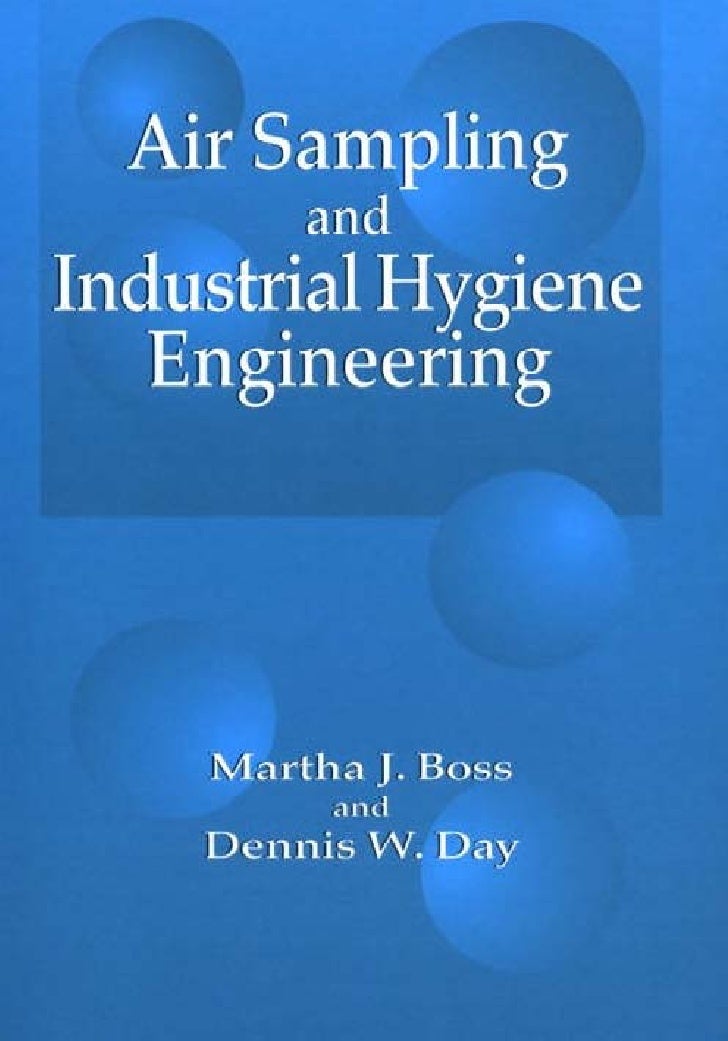
We know certain chemicals cause problems in the workplace. The issues now are: Where do they occur in the workplace? How can we best evaluate them? What are the procedures for dealing with them safely? Many books simply define the problem and tell you that you need a program. Air Sampling and Industrial Hygiene gives you a guide to air sampling protocols from start to finish.
The book presents sampling technology updated with today's tools – such as microcircuitry and remote sensing. The authors emphasize an interdisciplinary approach to understanding how air monitoring can adequately report current environmental conditions associated with outdoor media, indoor remediation efforts, proximal equipment, interior line monitoring, and the interrelationship of ventilation parameters.
In addition to providing the how-tos of sampling, this guide covers the basics of chemical risk assessment, biological assessment, engineering evaluation of mechanical system design criteria, and chemical or process engineering hazard assessments. It presents the information using text, text outlines, graphics, and pictures – including cross sections of instrumentation and side bars to elaborate on complex concepts.
Faulty readings caused by poor sampling techniques can be very costly. This book provides the how-tos for making design engineering and on-site decisions as to instrumentation selection and scheduled usage. Air Sampling and Industrial Hygiene Engineering will allow you to complete the sampling process systematically and correctly from initial suspicions to the use of obtained results.
CONTENT :

Documentation Sample Documentation Competency for Sampling Technicians Sampling Activity Hazard Analysis (AHA) Security Equipment Precautions Adverse Temperature Effects Explosive Atmospheres Atmospheres Containing Carcinogens
AIR SAMPLING INSTRUMENTATION OPTIONS
Volatile Organic Compound (VOC) Ozone Meter Toxic Gas Meters Semi-volatile Organic Compounds (SVOC) Acid Gases or Caustics Mercury Analyzer-Gold Film Analyzer Particulates - Sampled by Filtration/Impaction Gravimetric Filter Weighing Procedure Total Dust and Metal Fume Respirable Dust Inhalable Dusts Personnel Environmental Monitors (PEMs) Welding Fumes Asbestos Direct-Reading Dust Monitors Biologicals Radiation Monitors and Meters Light Ionizing Radiation Equation 2-1 Equation 2-2 Nonionizing Radiation
CALIBRATION TECHNIQUES
Calibration Requirements Manual Buret Bubble Meter Technique (Primary Calibration) Electronic Flow Calibrators Electronic Bubble Meter Method Dry Flow Calibration Precision Rotameter Method (Secondary) Span Gas Bump Testing
STATISTICAL ANALYSIS AND RELEVANCE
Definitions Example - Outline of Bulk Sampling QA/QC Procedure Example - Outline of the NIOSH 7400 QA Procedure Sampling and Analytical Errors (SAE) Sampling Methods Calculations Equation 4-1 Equation 4-2 Equation 4-3 Calculation Method for a Full-Period, Continuous Single Sample Equation 4-4 Equation 4-5 Equation 4-6 Sample Calculation for Full-Period, Continuous Single Sample Calculation Method for Full-Period Consecutive Sampling Equation 4-7 Equation 4-8 Sample Calculation - Full-Period Consecutive Sampling Grab Sampling SAEs - Exposure to Chemical Mixtures Equation 4-9
CHEMICAL RISK ASSESSMENT
Baseline Risk Assessment (BLRA) Conceptual Site Model Chemicals of Potential Concern (COPC) Human Health Baseline Risk Assessment Criteria Toxicity Assessment Toxicological Profiles Uncertainties Related to Toxicity Information Potentially Exposed Populations Environmental Fate and Transport of COPCS Exposure Points and Exposure Routes Complete Exposure Pathways Evaluated Ecological Risk Assessment Data Evaluation and Data Gaps Uncertainties Risk Characterization Head Space Monitoring - Volatiles O2/Combustible Gas Indicator (CGI) Industrial Monitoring - Process Safety Management Bulk Samples
BIOLOGICAL RISK ASSESSMENT
Fungi, Molds, and Risk Biological Agents and Fungi Types Aspergillus Penicillium Fungi and Disease Fungi Control Abatement
INDOOR AIR QUALITY (IAQ) AND ENVIRONS
Ventilation Design Guide Example Design Conditions Guidance Mechanical Room Layout Requirements Electrical Equipment/Panel Coordination General Piping Requirements Roof Mounted Equipment Vibration Isolation/Equipment Pads Instrumentation Redundancy Exterior Heat Distribution System Thermal Insulation of Mechanical Systems Plumbing System Compressed Air System Air Supply and Distribution System Ductwork Design Ventilation and Exhaust Systems Testing, Adjusting and Balancing of HVAC Systems Ventilation Adequacy Laboratory Fume Hood Performance Criteria Flow Hoods Thermoanemometer Other Velometers
AREA MONITORING & CONTINGENCY PLANNING Area of Influence Perimeter Air Monitoring by Task Page Evacuation Zones Site Work Zone Radiation Sites Equation 8-1 Equation 8-2 Equation 8-3 Equation 8-4 Equation 8-5 Table 8-1 Equation 8-6 Table 8-2 Equation 8-7 Equation 8-8 Table 8-4 Sample Weighting Factors Table 8-5 Table 8-6 Equation 8-9 Equation 8-10 Equation 8-11 Equation 8-12 Table 8-7
MICROCIRCUITRY AND REMOTE MONITORING
Continuous Indoor Air Quality Monitoring in Buildings Industrial/Remediation Process Monitoring
OCCUPATIONAL HEALTH - AIR MONITORING STRATEGIES
Exposure Measurements STEL
Sampling Exposure Fluctuations Air
Sampling Pump Donning Air Sampling - Asbestos
Table 10-1 Formula for Calculation of the 95 Percent Confidence Level
Table 10-2 NIOSH Method 7400 Table 10-3 EPA AHERA Method: TEM Air Sampling Protocol Crystalline Silica Samples Analyzed by X-ray Diffraction (XRD) Metals - Welding General Technique for Wipe Sampling
MONITORING FOR TOXICOLOGICAL RISK
Types of Sampling Quality Control
Exposure Evaluation Criteria
Examples of Chemicals that Require Monitoring
Confined Space Monitoring Welding
Exposure Evaluation Criteria
Examples of Chemicals that Require Monitoring
Confined Space Monitoring Welding
RISK COMMUNICATION AND ENVIRONMENTAL MONITORING
Federal Legislation Key
Compliance Requirements Key
Compliance Definitions Community Relations
Compliance Requirements Key
Compliance Definitions Community Relations
GLOSSARY OF TERMS
INDEX
6th Sem Mech.
Saturday, July 7, 2012
IN
6th Sem Mech.
,
Automatic Controls
,
Dynamics of Machines
,
Heat Transfer.
,
Industrial Engineering
,
Machine Design II
,
Measurement and Instrumentation
Views:
BY Anonymous
0 COMMENTS
0 COMMENTS


